ESI History
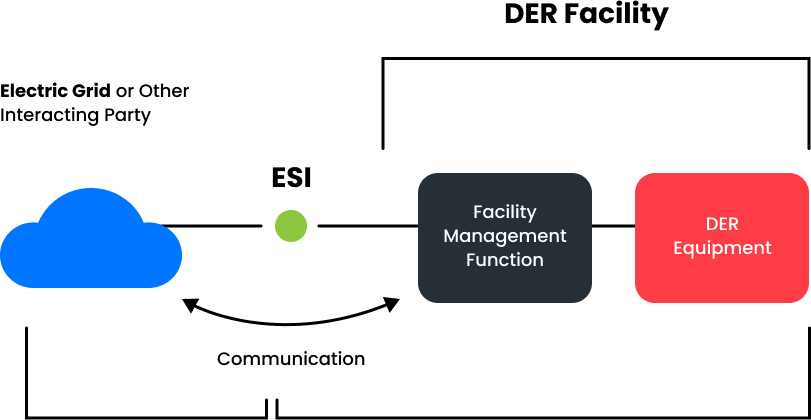
Energy Services Interface (ESI)
Real world interactions needed between system operators and grid edge facilities
for a smooth DER empowered energy transition.
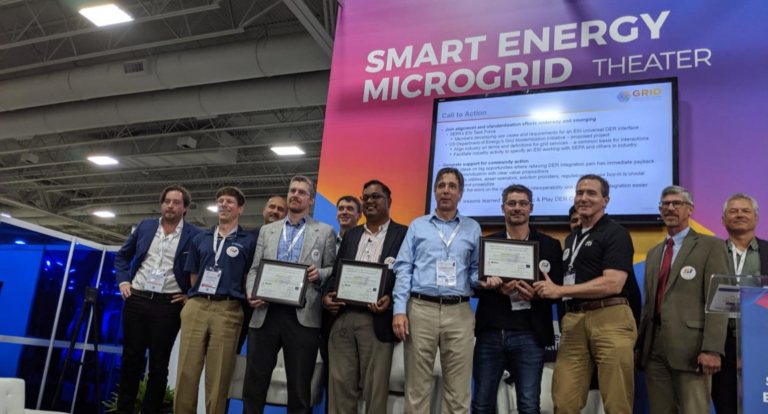
Ecosuite’s tech team were involved in the finals of the Department of Energy’s 2019 Plug and Play DER Challenge aimed at identifying and implementing grid modernization strategies. The ESI prototype they developed follows a first principles approach that deals with time, location, energy and money. The technology stack of this prototype leveraged JSON, MQTT and Protocol Buffers to ensure high performance and backwards compatibility.
ESI IN PRACTICE
Given the importance of digital communications in the modern grid, it would be a nice starting point if the human language used to describe services provided by Distributed Energy Resources (DER) to the Grid had common foundations that we all could use. Ideally there would also be a protocol specification or API implementation that generically supported the Energy Services Interface (ESI) concepts. Currently the industry has good solutions like OpenADR, 2030.5 and 1547 that go some of the way towards this. However, there is still work to be done.

ESI Specifications
These links below are for ESI reference material developed and released by DoE / Labs / GWAC etc. Knowing about this stuff is a good way of understanding the architecture (and the language / definitions) of the grid services and associated interfaces between system operators and DER on the grid:
Why Is An ESI Important?
The state of the current grid is similar to that of the Internet’s precursor in 1972.
In 1972, ARPANET was a collection of disparate computer networks with limited interoperability and a centralized structure. Today's power grid has very similar characteristics, it is centrally managed and lacks seamless communication and coordination, especially with respect to new edge deployed DER technologies.
Is this the future we want for our electric grid?
If efforts to evolve beyound ARPANET and a growing number of incompatible proprietary soluitions had not succeeded, we might still be using incompatible network cards and software drivers, struggling to connect siloed groups of computers from one place to another (for those old enough to remember, this was a nightmare we don't want to repeat).
Mirroring our current situation
With a lot of hard work in the 1980’s, TCP/IP the open protocol standard at the base of our modern Internet was introduced and began to be adopted, culminating with many vendors coming together to ensure their competing product’s interoperated under this common protocol. This open interoperability is the future we want for the Grid.


 Unlimited external users