

The future of energy is definitely renewable, but a major bottleneck is holding things back: interconnection delays. Today, vast amounts of wind, solar, and battery storage capacity are stuck in long interconnection queues, often waiting years for approval (or rejection!). We’re applying outdated standards to cutting-edge technology, and it’s costing us billions of dollars in time and money. A swift transition to a sustainable energy future is at risk if we don’t fix this problem. That’s where “Zero IX” comes in.
What is Zero IX?
Zero IX (or Interconnection Zero) is our proposed approach to completely eliminate renewable energy project interconnection queue delays. Instead of a drawn-out application process, projects that meet pre-defined engineering guidelines and specifications would be instantly “ready-to-connect” at their chosen location. Think of it as a “plug-and-play” system for renewable energy.
How Does it Work?
The core idea is to set clear engineering guidelines for Distributed Energy Resources (DERs). These guidelines would ensure that systems are inherently capable of supporting grid reliability and stability. To robustly achieve this result, we need the following:
- Engineering Guidelines: We will define specific technical requirements that DERs must support. This includes things like smart inverter capabilities / settings, load flexibility, energy storage and ultimately the requirements for how these collective DER capabilities are securely and cost effectively exposed to the System Operator / Utility to leverage (and don’t worry, we already have this covered!).
- Independent Engineer Certification: Instead of joining a queue, projects submit commissioning documentation approved by an independent engineer. This documentation confirms that the project meets the established engineering guidelines.
- Automated Approval: A web based self service portal is used to approve projects. Upon receiving the necessary documentation, the interconnection is automatically approved. The system achieves this by verifying the authenticity of the submitting engineer and their credentials, leading to what is effectively an instant approval (i.e. Zero IX)
- Continuous Monitoring: To maintain integrity, there is automated monitoring of randomly selected DER projects to ensure continuous ongoing statistically verified compliance of all connected DER. This monitoring also serves as a mechanism to verify and confirm the integrity of the work performed by the independent engineers.
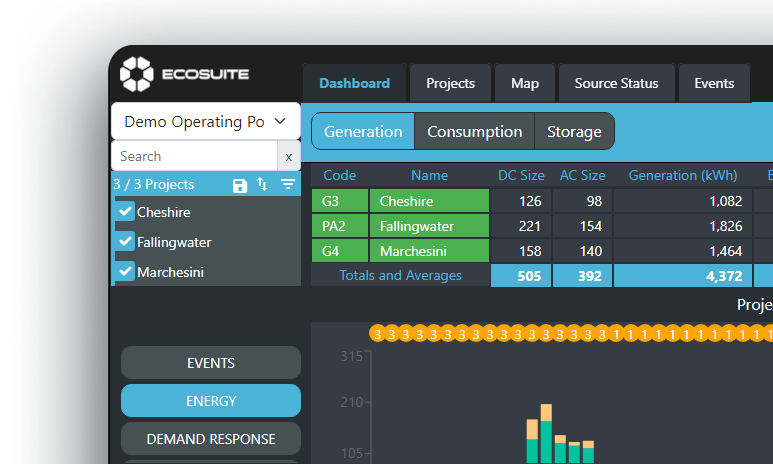
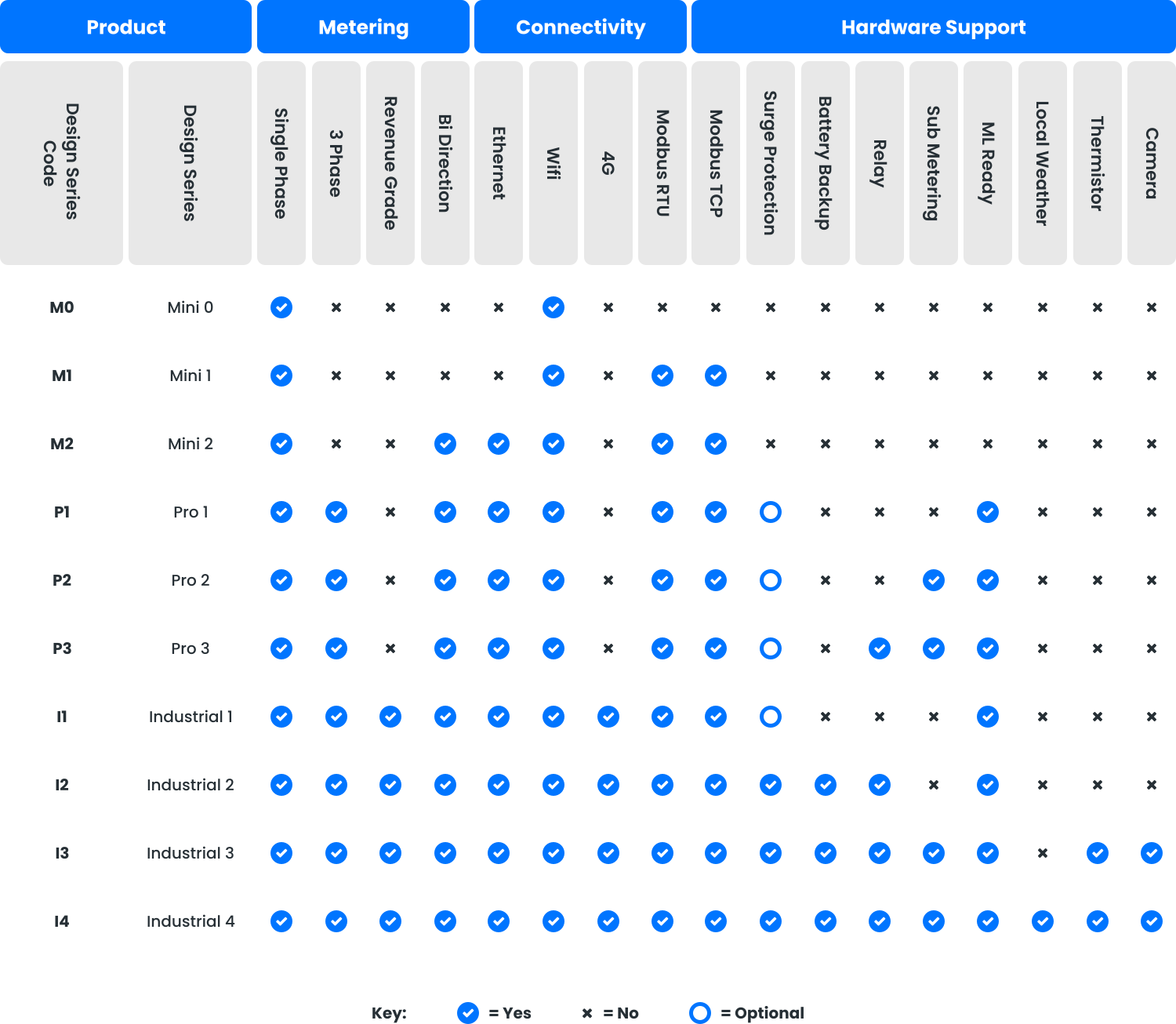
See how Ecosuite’s platform already supports the technical requirements Zero IX needs:
Why Zero IX?
- Speed: Eliminates years-long interconnection queues, allowing renewable projects to come online much faster.
- Efficiency: Reduces (likely eliminates) the cost and complexity of interconnection studies.
- Grid Stability: Ensures that connected DERs are no longer a real or perceived problem that needs to be mitigated. Instead DERs become a valued and useful grid service inherently supporting grid reliability and stability.
- Economic Benefits: Swiss studies one and two point the way forward (that’s what we call them anyway! More generically, they are DER firm power studies, one is based in Switzerland, the other more recently in mainland USA). These studies make it obvious that overbuilding solar combined with intelligent locational planning, curtailment and minimal storage creates cost positive societal benefits. Ultimately this means that DER owners, grid operators and rate payers can and will benefit. Adjustments to regulation will most likely be required to ensure this result is achieved and to evenly distribute the benefits (we will have more on this in an upcoming blog).
Key Components of Zero IX
The plan for Zero IX includes the following components:
- Defining Commissioning Requirements: Establish the technical standards for DERs based on successful examples like HECO in Hawaii and research from the International Energy Agency (IEA).
- Cloud-Based Verification: Develop a cloud based platform to verify independent engineer identities and automate the approval process (ideally this initial platform would be open source to encourage industry wide adoption).
- Continuous Monitoring System: Implement a system to ensure ongoing compliance and to enforce accountability for the independent engineers (ideally this initial system would also be open source to encourage industry wide adoption).
The Impact
By shifting to a Zero IX approach, we can dramatically accelerate the deployment of renewable energy, making the grid more resilient, reliable, and economically efficient. The analysis process becomes streamlined to verifying documentation and the integrity of independent engineers instead of prolonged studies, enabling instant approval and faster grid integration.
Conclusion
Zero IX has the potential to transform the energy landscape, enabling a faster and smoother transition to a renewable future. Ecosuite is committed to spreading the word on Zero IX and establishing it as a common approach across many jurisdictions. It’s about removing barriers and unleashing the full potential of distributed energy resources to power our beautiful world. Join us.
Ready to Skip the Queue?
Whether you’re a developer waiting in an interconnection queue, an IPP managing a DER portfolio, or a utility exploring streamlined approvals, we’d love to talk.
Frequently Asked Questions
What is Zero IX?
Zero IX (short for “Interconnection Zero”) is an approach to renewable energy interconnection that eliminates traditional queue delays. Projects that meet pre-defined engineering guidelines are instantly approved through an automated process initiated by trused independent engineers who certify the project and its documentation via an online platform.
How does Zero IX differ from the current interconnection process?
The current process puts DER projects into queues that can last 2-5+ years. Zero IX replaces that queue with an instant, automated approval – provided the project functionally meets the predefined engineering guidelines, this fact is certified by an independent engineer.
Who certifies a project under Zero IX?
An independent engineer – similar to how a building inspector certifies a construction project. The engineer confirms the project functionally meets the predefined engineering guidelines and uploads documentation aserting and supporting this fact. The system verifies the engineer’s identity and credentials before issuing approval.
Is Zero IX safe for grid stability?
Yes. The engineering guidelines that gate approval are specifically designed to ensure DERs support – not threaten – grid reliability. Continuous automated monitoring of randomly sampled projects keeps the entire connected fleet compliant over time.
Where can Zero IX be implemented today?
Zero IX is a regulatory and technical framework. Globally, jurisdictions are moving toward or have already implemented components of this approach. The technology required to implement Zero IX is not the problem, it already exists; the work that remains is regulatory alignment.
How can my organization get involved?
Whether you’re a developer, an IPP, a utility, or a regulator exploring streamlined interconnection, Ecosuite would love to talk. Book a demo or email our team to discuss what Zero IX could look like in your context.


 Unlimited external users


This is great stuff. We need to start proposing this approach to the state legislatures and PSC leadership…or possibly go directly to FERC to create rules that can cascade down to all ISO/RTOs.
Would be good if you had a share link to post this to LinkedIn, Facebook, etc.
Hi David, 100% agree. Also, the share links you suggested are now
active on the blog posts if you want to make use of them!
Could you please show me the detail